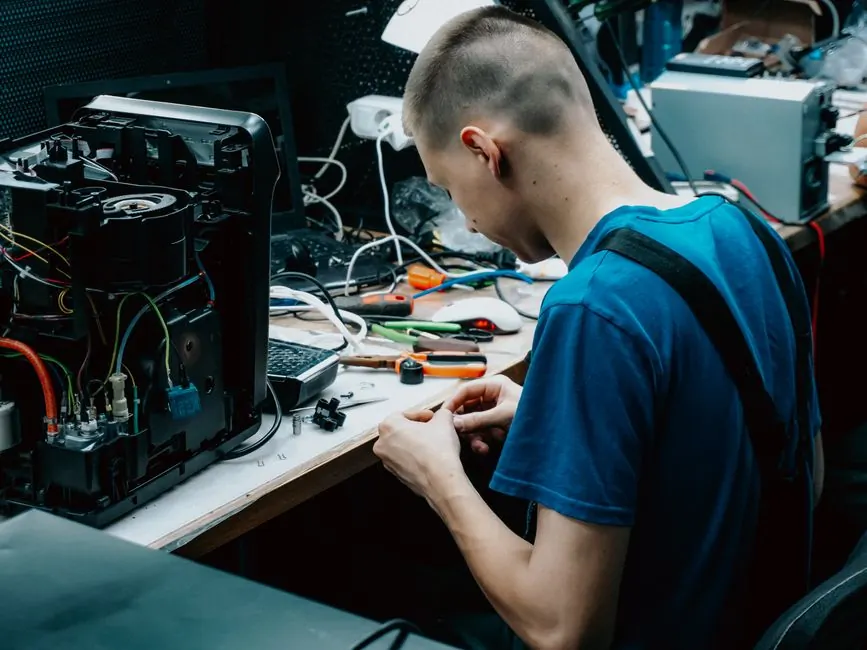
If your furnace is under 12 years old and the repair costs less than half of a new system, repair it. If it is over 15 years old, needs a $1,200+ repair, or has failed twice in two winters, replace it. That is the short answer. The rest of this post walks through the exact numbers, the 50% rule, and the Saint Joseph-specific factors - our cold snaps, our older housing stock, our gas rates - that push the decision one way or the other.
The short answer: when to repair and when to replace
Repair or replace your furnace: how to decide comes down to three numbers - age, repair cost as a percentage of replacement cost, and how often the unit has broken down in the last two heating seasons. If two of those three point toward replacement, replace.
Here is the decision framework we use on service calls every week:
- Under 10 years old, first breakdown, repair under $600: repair. You have plenty of life left.
- 10-15 years old, repair $600-$1,200: borderline. Look at efficiency gains and how long you plan to stay in the house.
- Over 15 years old, any repair over $1,000: replace. You are throwing money into a unit that is near the end of its design life.
- Any age, cracked heat exchanger: replace. That is a safety issue, not a repair decision.
We run this math for homeowners across Saint Joseph every fall. Most people are surprised how often the answer is "repair" - furnaces are simpler than people think, and a $400 igniter or blower motor replacement can buy you another five winters.
How old is your furnace? Lifespan in Saint Joseph
The average furnace in Saint Joseph lasts 15 to 20 years. That range is shorter than the national average because our winters are harder on equipment - we run our furnaces from October through April, often at full capacity during January cold snaps that drop into single digits.
You can find your furnace's manufacture date on the data plate inside the burner compartment. The first four digits of the serial number usually encode the week and year. If your unit was built before 2010, you are in the replacement window. If it was built before 2005, you are on borrowed time.
Two other age-related factors matter here:
- Parts availability. Once a furnace hits 15 years, some manufacturers stop making proprietary control boards and inducer motors. We can often source aftermarket parts, but the wait times stretch and the prices climb.
- Efficiency. A furnace installed in 2000 was likely 80% AFUE. Today's standard is 95%+ AFUE. That 15-point gap translates to real money on your Missouri Gas Energy bill every month.
If you are not sure how old your unit is, we can date it on a diagnostic visit. Knowing the age changes the entire repair-or-replace calculation.
The 50% rule: repair cost vs. replacement cost
The 50% rule says: if the repair costs more than half of what a new furnace would cost, replace it. This is the single most useful rule of thumb in the HVAC trade, and it holds up well in Saint Joseph.
Here is how it plays out with 2026 pricing. A standard 80,000 BTU, 95% AFUE gas furnace installed in a Saint Joseph home runs $4,200 to $6,800 depending on ductwork, venting, and whether you need a new flue liner. Half of that is roughly $2,100 to $3,400.
So if a technician quotes you $2,500 to replace a heat exchanger in a 16-year-old furnace, the 50% rule says replace. If the quote is $450 to replace a flame sensor in a 9-year-old furnace, repair - obviously.
The gray zone is the $900 to $1,800 repair on a 12-to-14-year-old unit. At that point, ask yourself three questions:
- How long do you plan to stay in this house? Under five years, repair. Over ten, replace.
- How many repairs has this furnace needed in the last three years? Two or more, replace.
- What is your monthly gas bill in January? If it is over $200 and your furnace is 80% AFUE, a high-efficiency replacement pays for part of itself.
We give every customer a written repair quote and a replacement quote side by side, so you can see the math yourself. No pressure either way.
Signs you need a new furnace in Saint Joseph, Missouri
Some failures are repairable. Others are the furnace telling you it is done. These are the signs that point toward replacement:
- Yellow or flickering burner flame. A healthy gas flame is blue. Yellow means incomplete combustion, often a cracked heat exchanger or a dirty burner assembly. Cracked heat exchangers leak carbon monoxide into your home - that is a replace-now situation.
- Rust flakes or soot around the burner compartment. Moisture and corrosion inside the cabinet mean the unit has been running wet for years.
- Repeated ignition or flame sensor failures. One replacement is normal. Three in two winters means the control board or gas valve is failing, and those are expensive.
- Rising gas bills with no change in usage. A furnace loses efficiency as it ages. If your January bill jumped 20% year over year and the weather was similar, the furnace is the culprit.
- Loud banging, booming, or screeching on startup. Some noises are blower motor bearings - repairable. Others are delayed ignition, which is a safety concern.
- Uneven heating room to room. Sometimes this is ductwork, sometimes it is a failing blower motor. We diagnose which before recommending anything.
If you are seeing two or more of these on a furnace over 12 years old, replacement is usually the smarter financial move.
What a new furnace costs in Saint Joseph in 2026
Typical 2026 pricing in Saint Joseph for a full furnace replacement runs $4,200 to $6,800 for a standard 95% AFUE gas unit, and $6,500 to $9,500 if you step up to a two-stage or modulating system with a variable-speed blower. Those numbers include the equipment, labor, haul-away of the old unit, and a new thermostat.
What pushes you toward the high end:
- New flue liner or PVC venting (required for high-efficiency condensing furnaces).
- Ductwork modifications to match the new unit's airflow.
- Electrical upgrades if the old circuit is undersized.
- Removing an old draft hood and installing a new condensate drain line.
What keeps you at the low end: a straight swap of a similar-sized unit, existing venting that meets code, and a simple single-stage replacement.
Repairs, by comparison, run $150 to $450 for common fixes like a flame sensor, igniter, or thermostat. Blower motor replacements land around $450 to $850. Control boards and inducer motors run $600 to $1,200. Heat exchanger replacements - when they are even possible - start around $1,500 and often climb past $2,500.
That gap between a $300 repair and a $5,500 replacement is why the 50% rule works. It is not about whether you can afford the repair. It is about whether the repair buys you enough additional life to justify the spend.
Common mistakes homeowners make
The most expensive mistake we see is replacing a furnace that only needed a $200 part. The second most expensive is repairing a furnace that should have been replaced two winters ago - usually right before the heat exchanger cracks.
Other mistakes worth avoiding:
- Choosing a contractor on price alone. A $3,800 quote that skips the flue liner, the permit, and the combustion air calculation is not a deal. It is a future problem.
- Oversizing the new furnace. Bigger is not better. An oversized furnace short-cycles, wears out faster, and leaves hot and cold spots. We size every replacement with a Manual J load calculation.
- Skipping the annual tune-up. A $99 fall tune-up catches most of the failures we get called for in January. It is the cheapest insurance you can buy.
- Ignoring carbon monoxide detectors. If you have any fuel-burning appliance, you need a CO detector on every level. This is not optional.
- Waiting until the furnace dies in a cold snap. Emergency replacements cost more and you have no leverage on scheduling. Plan ahead in September or October.
One more: do not assume a brand-new furnace is automatically the right answer for a house you are selling in the next year. Sometimes a clean repair and a service record is the better move. We will tell you honestly which one fits your situation.
When to call a professional
Call a professional any time you smell gas, see a yellow flame, hear delayed ignition, or find soot around the furnace. Those are safety calls, not DIY calls.
For everything else - no heat, short cycling, weird noises, rising bills - the decision between repair and replace is easier with a trained eye on the equipment. Our technicians diagnose the actual failure, quote the repair, and quote the replacement side by side. You decide. We do not push one over the other.
If you want a second opinion on a repair quote you already have, we are happy to look at it. That is a free service we offer to homeowners across Saint Joseph.
Frequently Asked Questions
Should I repair or replace my furnace in Saint Joseph, Missouri?
Repair if the furnace is under 12 years old and the fix costs less than 50% of a new system. Replace if it is over 15 years old, needs a repair over $1,200, has failed twice in two winters, or has a cracked heat exchanger. Those thresholds hold up well in our climate.
How do I decide between furnace repair and replacement in Saint Joseph?
Run three numbers: age, repair cost as a percentage of replacement cost, and repair frequency over the last two heating seasons. If two of the three point toward replacement, replace. A technician can give you both quotes in one visit so you can compare directly.
What is the lifespan of a furnace in Saint Joseph?
Fifteen to twenty years. Our long, cold winters - October through April - shorten the lifespan compared to milder climates. Furnaces built before 2010 are in the replacement window; those built before 2005 are on borrowed time.
Is it worth repairing an old furnace in Saint Joseph?
Only if the repair is under $600, the furnace is under 15 years old, and it has not needed multiple repairs recently. Otherwise, the money is better spent on a new 95% AFUE unit that will cut your January gas bill and come with a warranty.
How much does a furnace replacement quote in Saint Joseph usually run?
In 2026, expect $4,200 to $6,800 for a standard 95% AFUE gas furnace installed, or $6,500 to $9,500 for a two-stage or modulating system. Those prices include equipment, labor, haul-away, and a new thermostat. Ductwork or venting changes add to the total.
Get help with Furnace Repair in Saint Joseph
If you are staring at a repair quote and wondering whether to sign it or start shopping for a new furnace, call us. We will tell you straight which one makes sense for your house, your budget, and how long you plan to stay.
Call (816) 339-6148 to schedule a diagnostic visit or a free replacement quote.